
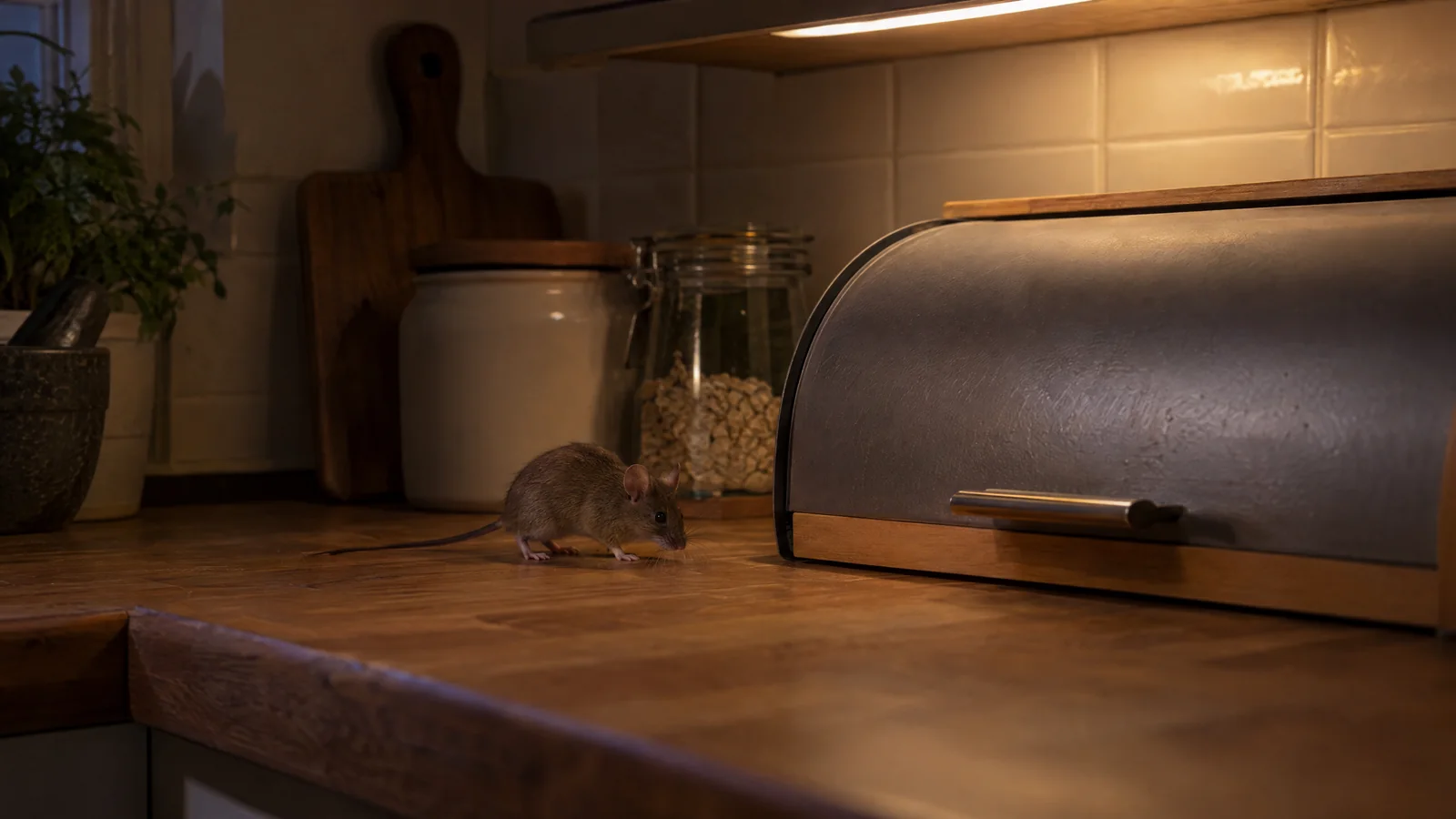
One mouse is rarely just one mouse. A calm, step by step plan for dealing with a mouse problem at home, from the first dropping to a fully proofed house.
It usually starts with something small. A torn corner on a cereal box, a few tiny dark droppings in the cutlery drawer, or a flicker of movement by the cooker when you switch the light on. If you think you have a mouse problem at home, you are far from alone: as the weather turns in Manchester, Stockport and Cheshire, mice start looking for somewhere warm, and our homes are perfect.
The good news is that mice are very manageable when you act early and act thoroughly. Below is a straightforward plan, in the order we would suggest you follow it.
Step one: confirm it really is mice
Before you buy anything, be sure of what you are dealing with. Mice and rats need different approaches, and the clues are fairly easy to read.
Mice usually leave:
- Lots of small, thin droppings, scattered rather than in piles
- Small, neat holes nibbled in packaging, especially cereals, seeds and pet food
- A faint, musty, ammonia-like smell in cupboards that stay closed
- Light, quick scratching in walls or ceilings at night
- Shredded paper, fabric or insulation gathered into a nest in a quiet corner
If the droppings are much larger, or the noises sound heavy, read our guide on how to recognise the signs of rats instead. The house mouse species profile on our site is also useful if you want to know more about the animal itself.
Step two: find out how they are getting in
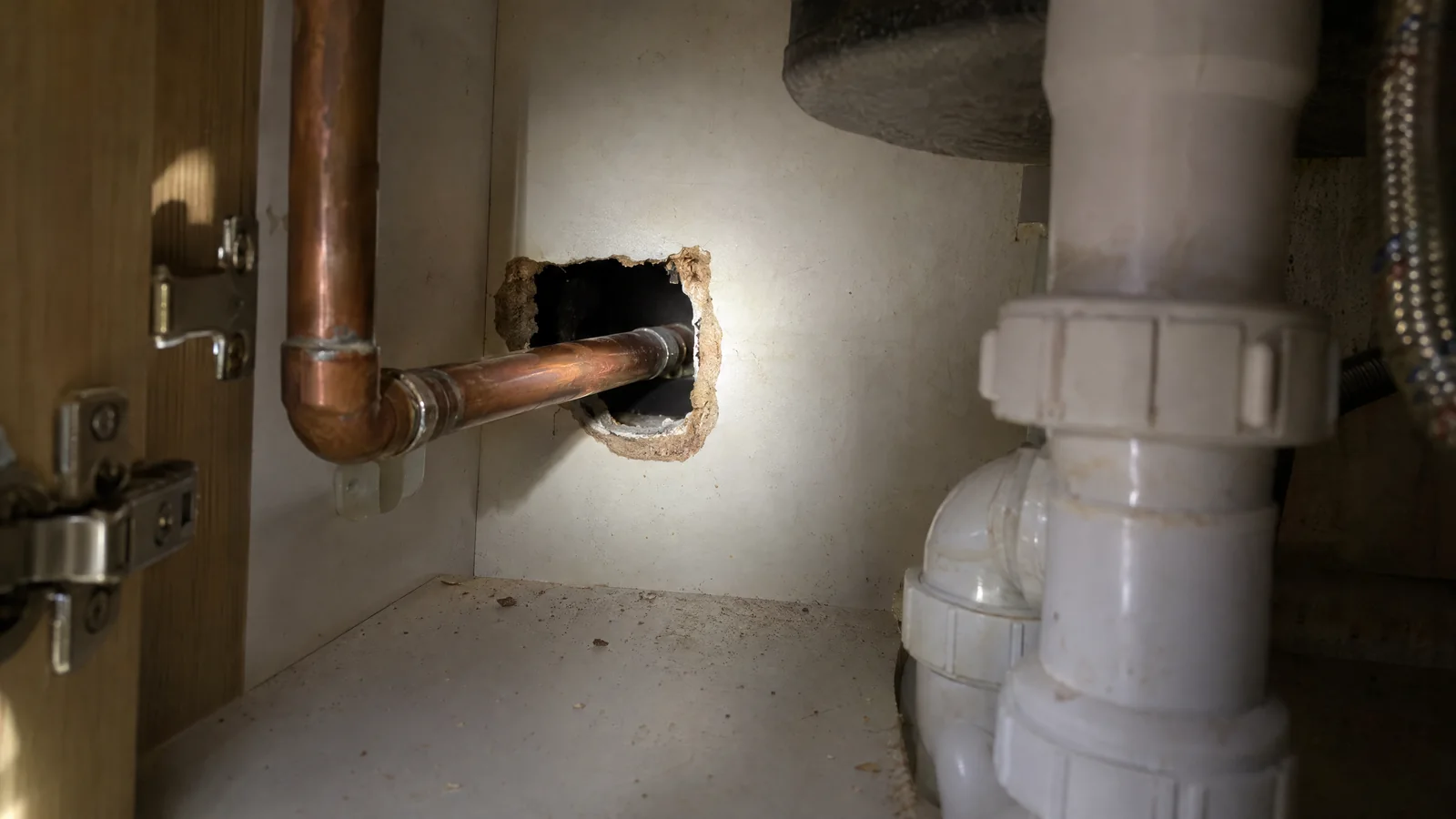
Mice are agile climbers and can squeeze through surprisingly small gaps. In older terraces across south Manchester and Stockport, they often come in through gaps beneath floorboards, around waste pipes or through worn air bricks. In newer homes, the culprits tend to be service entries for gas, water and cables, gaps behind kitchen units and garage doors that do not close tightly.
A quick walk-round checklist
Take a torch and look at:
- The back of the kitchen units, under the sink and behind the cooker
- Where the boiler pipes, washing machine waste and cables pass through walls
- Air bricks and vents on the outside walls
- Gaps around the front and back door, and under the garage door
- The loft hatch and the eaves, especially if something is stored up there
- Anywhere a neighbour's property joins yours, such as shared walls in a semi or terrace
Make a note of anything that looks big enough to push a pencil into. Those are the points that matter.
Step three: take away the food and the hiding places
Mice do not need much food, but they need it regularly. Starve them of easy meals and they become far easier to control.
- Move cereals, pasta, flour, sugar and pet food into hard containers with tight lids.
- Wipe worktops and sweep floors each night, including under the toaster and microwave.
- Do not leave pet bowls down overnight.
- Pull the cooker and fridge out and clean underneath if you can do so safely.
- Clear clutter from cupboards, the bottom of wardrobes and the garage, since boxes and bags make perfect nesting spots.
- Keep bird food in sealed tubs, and avoid scattering seed on patios close to the house.

Step four: decide whether your mouse problem at home needs a professional
Some people choose to try simple measures first. That can be reasonable for a single mouse seen once. But the reality is that by the time you notice droppings, mice are usually well settled, and they breed quickly. Calling in a professional makes sense when:
- You find droppings in more than one room
- You have seen mice in daylight
- The problem has lasted more than a week or two
- You share walls with neighbours or live in a block of flats
- There are young children, elderly relatives or pets in the home
- Mice have chewed cables or got into food
Want a second opinion? Ring Protec on 0161 448 1782. We answer 24/7 and can talk through what you have found before anyone visits.
A good technician will confirm the activity, find the entry points, recommend a treatment that suits your home and explain what proofing is needed so the mice cannot simply come back. Protec's mouse control service covers houses, flats and businesses, and our vans are unmarked, so a visit is discreet.
Step five: proof the property properly
Treatment removes the mice you have. Proofing stops the next ones. Common proofing work includes filling gaps around pipes with suitable materials, fitting brush strips to doors, replacing damaged air bricks with mesh-backed versions and sealing gaps behind kitchen units. The aim is to make the building as difficult to enter as possible, rather than relying on treatment alone.
Do not seal holes until the active mice have been dealt with. Blocking a hole with mice still inside can push them into other parts of the house.
Common mistakes with mice
- Thinking it is just one. Where there is one, there are usually more.
- Cleaning up droppings with a vacuum or dry brush. This can spread dust. Wear gloves, spray with a household disinfectant first, then wipe up with paper towels.
- Focusing only on the kitchen. Mice travel through floor and wall voids, so they may be nesting well away from where they feed.
- Stopping too soon. Activity can drop off and then return. Keep an eye out for fresh droppings for a few weeks afterwards.
- Forgetting the garage and loft. Stored boxes, Christmas decorations and old bedding are favourite nesting spots.
Mice in your part of Manchester, Stockport or Cheshire
Mice are found everywhere, but the setting changes the approach. Flats in the city centre and Salford often share voids and service risers, so the building as a whole needs thinking about. Family homes in Heaton Moor, Bramhall and Cheadle tend to have garages, extensions and lofts that give mice plenty of room. Rural and semi-rural properties around Poynton, Bollington and Macclesfield may see mice coming in from fields and outbuildings as the harvest finishes.
For local information, see our pages on help with mice in Manchester, mouse control in Stockport and mouse control in Macclesfield. You can also browse more pest advice from Protec on the blog.
Frequently asked questions
How do I know if it is mice and not rats?
Mice leave many small, thin droppings scattered widely, chew small neat holes in packaging and make light, quick scratching sounds. Rats leave fewer but much larger droppings, heavier noises and bigger gnaw damage. If you have seen the animal, mice are small with large ears and a long thin tail.
Why do mice come into houses in autumn?
As temperatures drop, mice look for warm, dry shelter close to food. Heated homes with gaps around pipes, under doors and through air bricks are ideal. That is why mouse calls rise from October onwards across Manchester and Cheshire, although problems can begin at any time of year.
Can mice get through very small gaps?
Yes. A young mouse can squeeze through a gap roughly the width of a pencil. That means worn door seals, gaps around cables and pipes, and spaces behind kitchen units are all possible entry points. Proofing needs to be thorough to work, which is where a professional survey helps.
Is it safe to treat for mice with pets in the house?
It can be, with the right approach. Protec keeps the safety of children and pets in mind, so tell the team about any animals at the property when you call. Treatment options and placement can then be chosen to suit your household.
Do you deal with mice in flats and shared buildings?
Yes. Mice often travel between flats through shared voids and service risers, so treating one flat alone may not solve it. Protec works with residents, landlords and managing agents across Manchester, Stockport and Cheshire. Call 0161 448 1782 to discuss the building.
Ready to get rid of the mice for good?
A mouse problem at home is stressful, but it is also one of the most common jobs a pest controller handles, and it can be sorted. Call Protec on 0161 448 1782 at any time, or request a quote through our contact page. Tell us your postcode, the rooms affected and how long you have noticed signs, and we will explain the most sensible way forward.
Questions answered
Frequently asked questions
How do I know if it is mice and not rats?
Mice leave many small, thin droppings scattered widely, chew small neat holes in packaging and make light, quick scratching sounds. Rats leave fewer but much larger droppings, heavier noises and bigger gnaw damage. If you have seen the animal, mice are small with large ears and a long thin tail.
Why do mice come into houses in autumn?
As temperatures drop, mice look for warm, dry shelter close to food. Heated homes with gaps around pipes, under doors and through air bricks are ideal. That is why mouse calls rise from October onwards across Manchester and Cheshire, although problems can begin at any time of year.
Can mice get through very small gaps?
Yes. A young mouse can squeeze through a gap roughly the width of a pencil. That means worn door seals, gaps around cables and pipes, and spaces behind kitchen units are all possible entry points. Proofing needs to be thorough to work, which is where a professional survey helps.
Is it safe to treat for mice with pets in the house?
It can be, with the right approach. Protec keeps the safety of children and pets in mind, so tell the team about any animals at the property when you call. Treatment options and placement can then be chosen to suit your household.
Do you deal with mice in flats and shared buildings?
Yes. Mice often travel between flats through shared voids and service risers, so treating one flat alone may not solve it. Protec works with residents, landlords and managing agents across Manchester, Stockport and Cheshire. Call 0161 448 1782 to discuss the building.
Need pest control advice?
Talk to Protec about your pest problem.
Call for clear advice and the right next step for your property.