
Trails across the kitchen floor, flying ants on the patio, tiny pale ants by the radiator? Why there are ants in the house, what the signs mean and why Protec gets results.
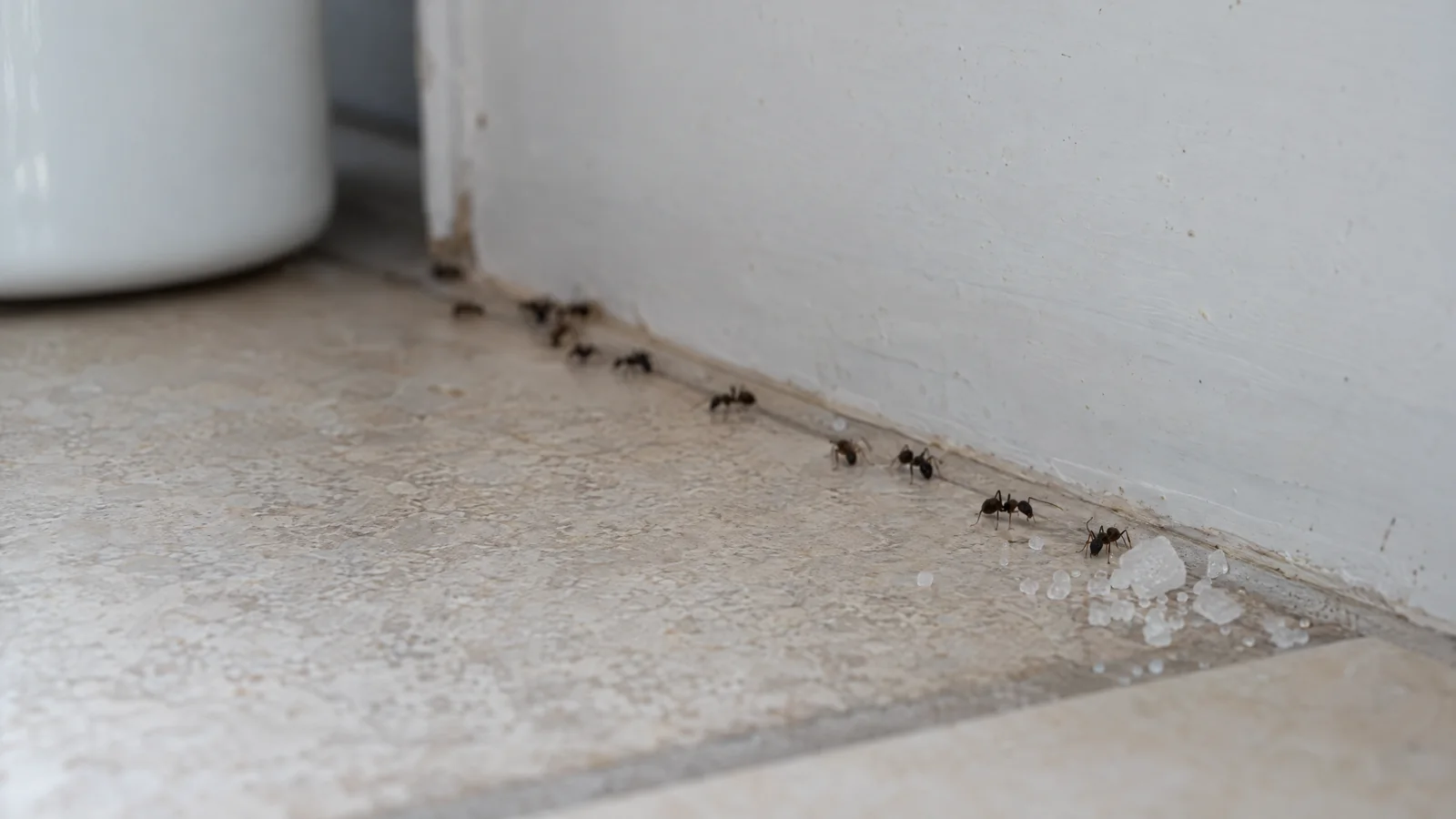
Ants are one of the most common reasons people call us in spring and summer. One day there is a single ant on the kitchen floor; the next there is a busy trail from the back door to the pet bowl. If you are wondering why there are ants in the house, the short answer is that they have found something they want and told the rest of the colony about it.
This guide explains the signs, the species you are most likely to meet across Manchester, Stockport and Cheshire, why ant problems keep returning and why professional ant control is the most reliable fix. Our ant species guide has more background.
How ants find their way indoors
Ants live in colonies, with a queen laying eggs and thousands of workers gathering food. Most of the colony stays in the nest. Foraging workers spread out to look for food and water, and when one finds something worthwhile, it lays a chemical scent trail on the way back to the nest. Other workers follow that trail, reinforcing it as they go.
That is why a single ant quickly becomes a line of them, and why trails reappear in exactly the same place day after day. The trail usually enters through a tiny gap around a door frame, window, pipe or crack in the floor, and the nest itself is often just outside.
The signs of ants in the house
- Trails along skirting boards, worktops, window sills and the edges of rooms.
- Ants gathering around sugar, honey, jam, fruit, pet food and crumbs.
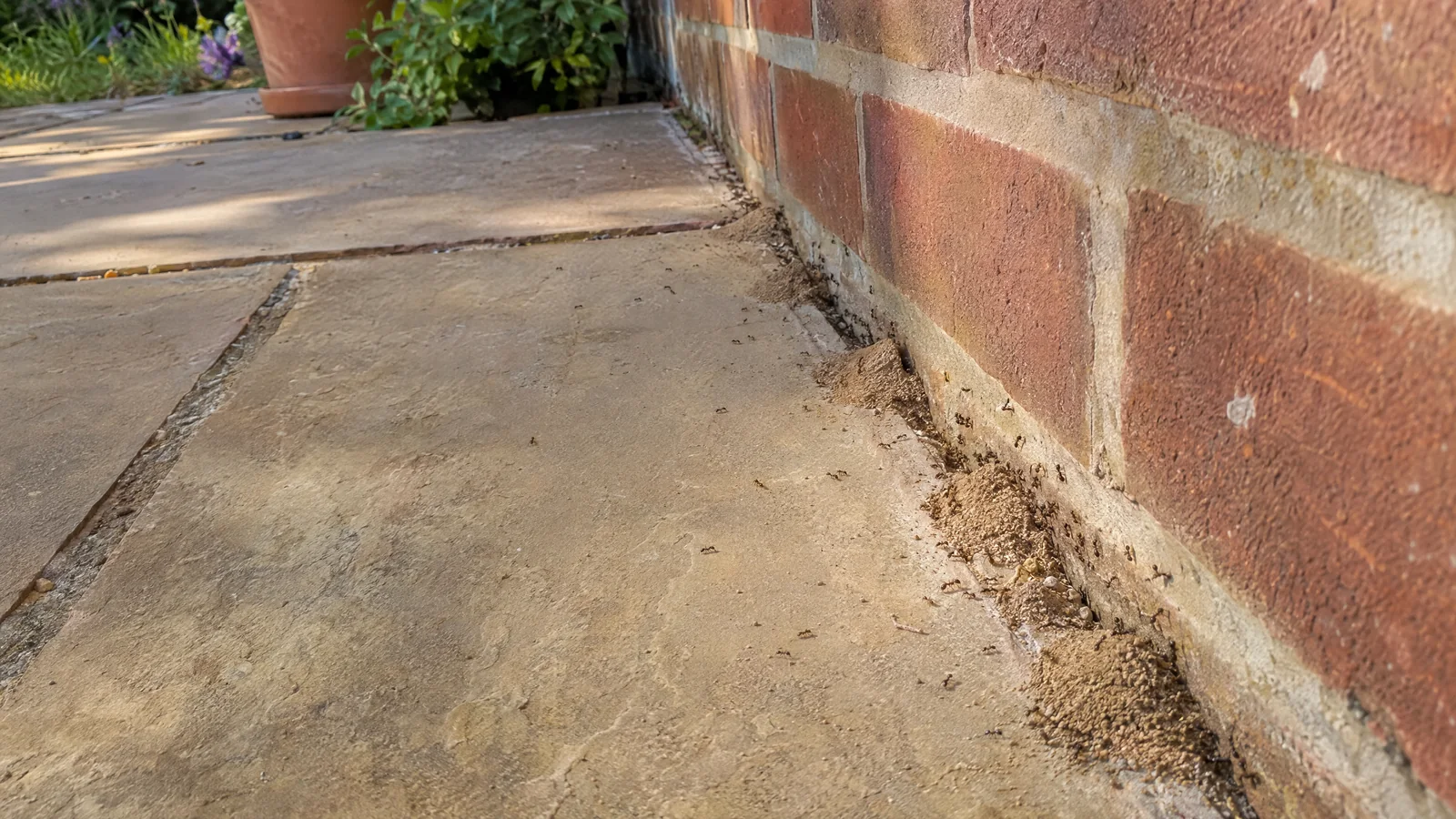
- Fine soil pushed up between paving slabs, along patio edges or at the base of walls.
- Ants appearing from unusual places, such as plug sockets, floor joints or behind tiles.
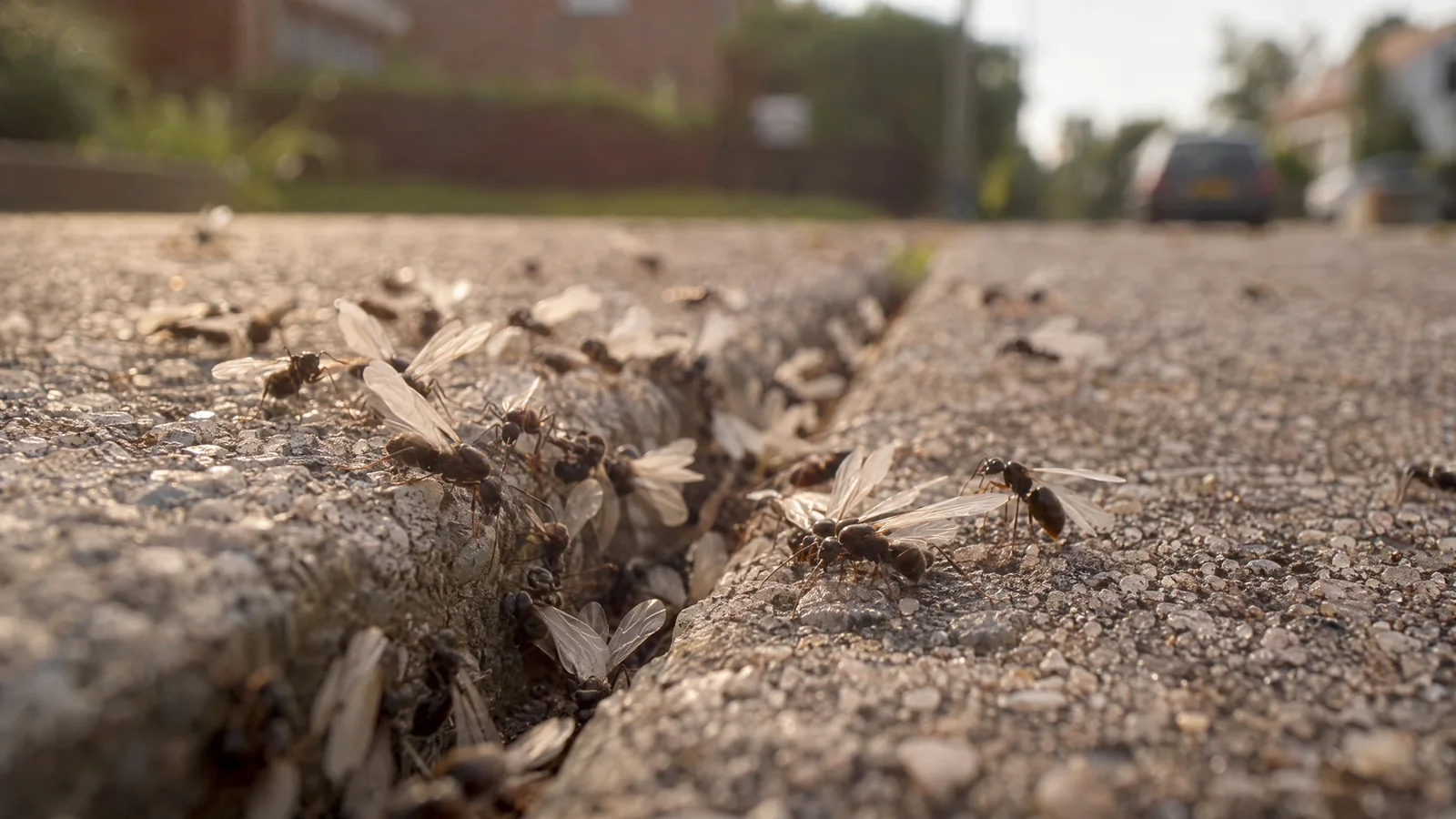
- Flying ants emerging outside on warm days, or, more concerning, inside the house.
- Very small, pale ants near heating pipes or in flats, which may suggest pharaoh ants.
Which ants do you have?
Black garden ants
The most common ant in our area. Dark brown to black, nesting outdoors under paving, lawns and borders, and foraging indoors from spring to early autumn. They are a nuisance rather than a structural threat, but trails across food areas are unpleasant and unhygienic.
Pharaoh ants
Tiny and pale yellow to light brown. They nest inside warm buildings, in wall voids, behind skirting and near heating pipes, and are more often found in apartment buildings, hospitals, care settings and commercial premises. They can spread through a building and need a specialist approach.
Flying ants
Not a separate species. These are winged males and new queens released by colonies on warm, humid days in summer. Large emergences are brief, but flying ants inside the house can mean a nest in the building.
Why ant problems keep coming back
Most of what people try only deals with the ants in view. The colony, the queen and the eggs remain in the nest, so new workers keep coming. Wiping trails away removes some of the scent, but foraging ants soon find the route again. With pharaoh ants, using the wrong product can cause the colony to break into several new nests, spreading the problem further.
Other reasons DIY struggles include not knowing where the nest is, misidentifying the species and the limits on what products the public can use safely around food, children and pets. Activity can drop for a few days and then return with the next warm spell.
If ants keep returning, call Protec on 0161 448 1782 and we will talk you through the options.
What professional ant control involves
Our ant control service starts with identifying the species and tracing where the ants are coming from, inside and outside. The technician will then explain a treatment plan aimed at the colony rather than just the visible workers, carry it out safely around your household and arrange follow-up where needed. For pharaoh ants and commercial premises, a planned programme over several visits is often required.
We treat ants across the area, including ant control in Manchester, ant control in Stockport and ant control in Knutsford.
When ants are most active
Ant activity builds from April, peaks in mid to late summer and fades in autumn. Flying ant days usually happen in July and August. Pharaoh ants are active all year in heated buildings. Our seasonal pest calendar shows how ant activity fits with other pests through the year.
The type of property makes a difference too. Victorian terraces in Stockport and Manchester often have nests under back yards, paving and the joints of old brick walls, with trails entering through tired door frames. Larger Cheshire gardens with patios, sandstone paths and rockeries can host several colonies at once, so ants appear in more than one room. Modern flats and commercial buildings are where pharaoh ants are most likely, especially where heating pipes run through several units. Food businesses, care settings and holiday lets are a particular concern, because ants on surfaces and food are noticed quickly by customers, residents and guests. When you call, tell us how big the ants are, what colour, and where you see them most, as it helps the technician prepare.
Frequently asked questions
Why are there ants in my house all of a sudden?
Usually because a foraging worker has found food or water indoors and laid a scent trail for others to follow. Warm spring and summer weather increases activity. The nest is often outside, under paving, lawns or at the base of a wall, with the trail entering through tiny gaps around doors, windows or pipes.
Are flying ants a sign of a problem?
Flying ants emerging outside on a warm, humid day are a normal part of the ant life cycle and last only a short time. Flying ants emerging from inside the house, though, such as from skirting boards or floors, can mean a colony in the building that needs professional attention.
What are the tiny pale ants near my radiators?
Very small, pale yellow ants indoors, especially near heating pipes, in kitchens or in flats, may be pharaoh ants. They nest inside warm buildings and can spread through apartment buildings and commercial premises. They need specialist treatment, as the wrong approach can cause the colony to split.
Why doesn't spraying the ants work?
Spraying kills the workers you can see while the queen and most of the colony remain safely in the nest. New workers soon follow the same trail. With some species, disturbing the colony makes things worse. Professional treatment identifies the species and targets the colony rather than just the visible ants.
Does Protec treat ants across Manchester and Cheshire?
Yes. Protec treats ants in homes and businesses across Manchester, Stockport and Cheshire, including Knutsford, Wilmslow and Macclesfield. Call 0161 448 1782 to describe the ants and where you are seeing them, and we will arrange an inspection and a clear quote.
Get rid of ants for good
If you have ants in the house that keep coming back, call Protec on 0161 448 1782 or request a quote online. For more advice, visit the Protec blog.
Questions answered
Frequently asked questions
Why are there ants in my house all of a sudden?
Usually because a foraging worker has found food or water indoors and laid a scent trail for others to follow. Warm spring and summer weather increases activity. The nest is often outside, under paving, lawns or at the base of a wall, with the trail entering through tiny gaps around doors, windows or pipes.
Are flying ants a sign of a problem?
Flying ants emerging outside on a warm, humid day are a normal part of the ant life cycle and last only a short time. Flying ants emerging from inside the house, though, such as from skirting boards or floors, can mean a colony in the building that needs professional attention.
What are the tiny pale ants near my radiators?
Very small, pale yellow ants indoors, especially near heating pipes, in kitchens or in flats, may be pharaoh ants. They nest inside warm buildings and can spread through apartment buildings and commercial premises. They need specialist treatment, as the wrong approach can cause the colony to split.
Why doesn't spraying the ants work?
Spraying kills the workers you can see while the queen and most of the colony remain safely in the nest. New workers soon follow the same trail. With some species, disturbing the colony makes things worse. Professional treatment identifies the species and targets the colony rather than just the visible ants.
Does Protec treat ants across Manchester and Cheshire?
Yes. Protec treats ants in homes and businesses across Manchester, Stockport and Cheshire, including Knutsford, Wilmslow and Macclesfield. Call 0161 448 1782 to describe the ants and where you are seeing them, and we will arrange an inspection and a clear quote.
Need pest control advice?
Talk to Protec about your pest problem.
Call for clear advice and the right next step for your property.