

Mice in January, queen wasps in April, ants in July, rats in October. A month by month pest calendar showing the signs to watch for and when to call a professional.
Pests follow the seasons. The same back garden that hosts wasps in August might be home to rats in November, and the loft that was silent in summer might echo with scratching by Christmas. This month by month pest calendar sets out what to watch for across Manchester, Stockport and Cheshire through the year, the signs that show a problem is starting and the point at which it is time to call a professional.
It is not a list of jobs to do yourself. It is a guide to recognising what is going on, so you can get the right help early. Our full pest directory has more on each species mentioned.
Winter: December, January and February
Cold weather drives pests indoors, and heated homes become very attractive.
December
Mice and rats are well established indoors by now. Listen for scratching in ceilings and walls, and look out for droppings in kitchen cupboards. Squirrels may be active in lofts. Our page on winter pest threats covers this season in more depth.
January
Rodent activity continues. Cluster flies may appear on sunny days around loft windows. Clothes moths stay active in warm homes, so look for holes in knitwear brought out for the cold weather.
February
Squirrels begin breeding, and loft noise can increase. Rodents remain active, especially in older terraces with suspended floors and in rural properties with outbuildings.
Spring: March, April and May
As temperatures rise, overwintering insects wake up and new nests begin.
March
Rodents are still active indoors. Adult carpet beetles start appearing on windowsills, a sign their larvae may have been feeding on carpets and clothing.
April
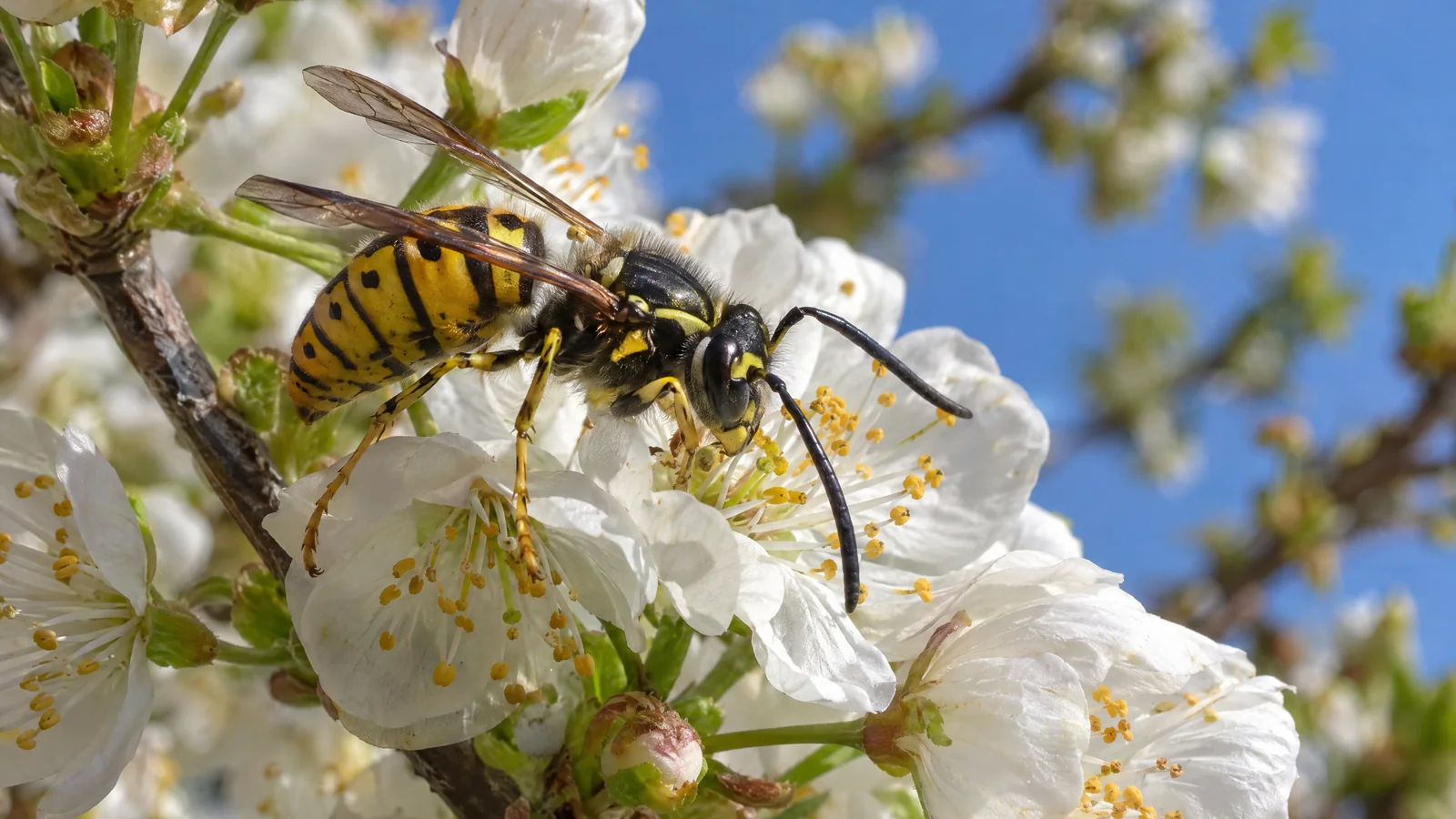
Queen wasps emerge and look for nest sites in lofts, sheds and eaves. A large single wasp flying slowly around a shed or loft is often a queen. Ants become more noticeable. Masonry bees may appear around soft mortar.
May
Small wasp nests grow quickly. Ant trails appear in kitchens. Clothes moth adults become more visible. Bird nesting is in full swing, including pigeons under solar panels.
Summer: June, July and August
Warm weather brings flying insects, and colonies are at their biggest.
June
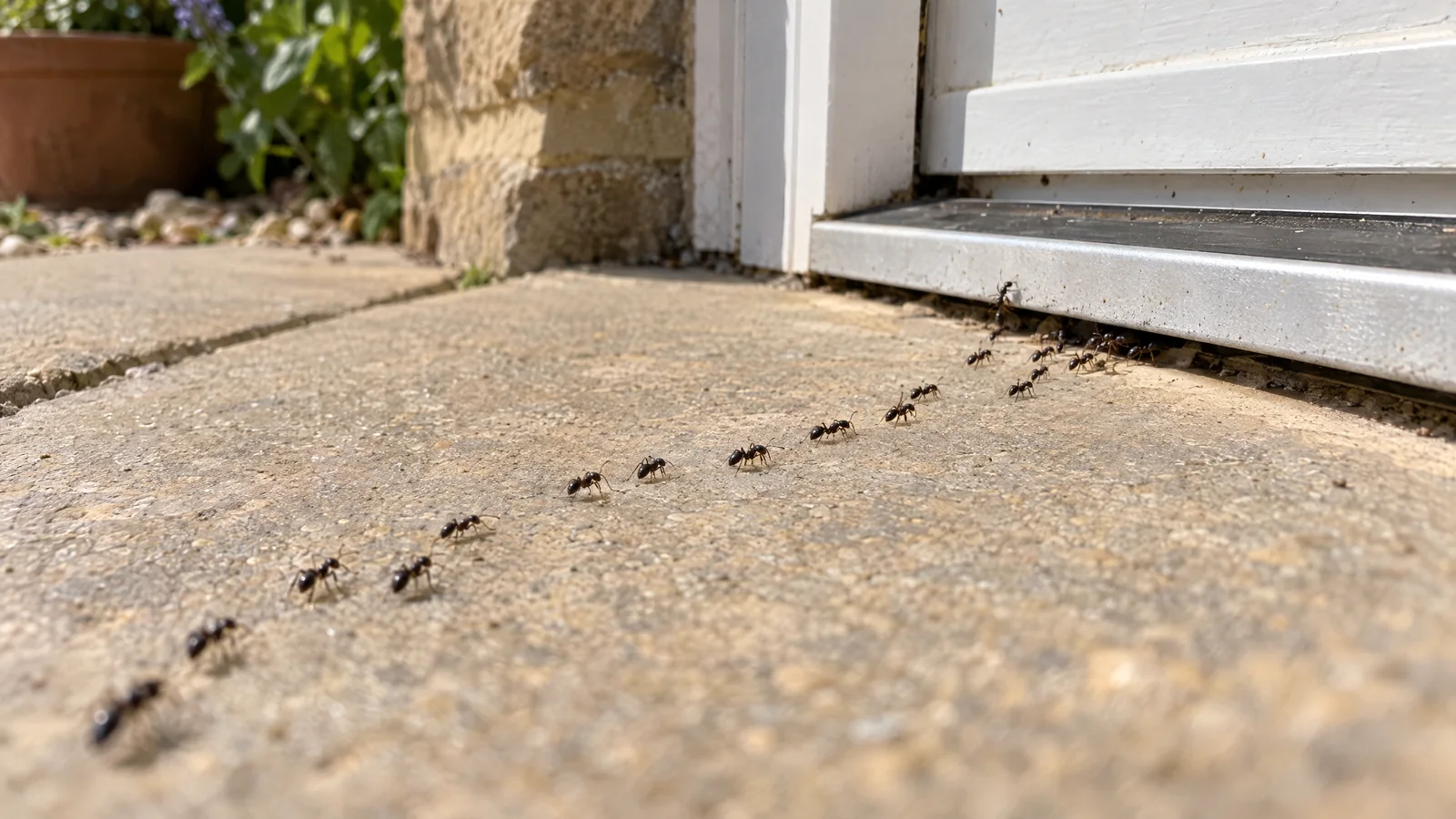
Wasp nests are growing fast. Ants are very active, and flies increase around kitchens and bins. Fleas become more noticeable in warm homes with pets.
July
Flying ants emerge on warm, humid days, usually in large numbers for a short time. Wasp nests continue to grow. Our ant control service covers persistent indoor trails.
August
Wasp nests are at their largest, and wasps become aggressive around food as the colony changes. This is the busiest month for wasp control. Flies peak in kitchens and food businesses; our house fly control page explains how we help.
Autumn: September, October and November
The year turns, and pests start heading for shelter.
September
Wasps remain a nuisance until the first frosts. Bed bug calls often rise after summer travel and the start of the student year. Rats and mice begin to move towards buildings.
October
Rodent season begins in earnest. Expect scratching in lofts, droppings in kitchens and gnawed packaging. Squirrels look for winter nesting sites in roofs. Clothes moth damage is often found as winter clothes come out; our guide to stopping clothes moth damage explains the signs.
November
Rodent activity indoors continues to rise. Cluster flies settle into lofts. Fleas may flare up as central heating warms homes.
Pests that ignore the seasons
Some pests do not follow the calendar at all. Cockroaches live in warm kitchens, boiler cupboards and service ducts, so the weather outside makes little difference to them. Bed bugs travel with people and luggage, and can turn up in any month in homes, hotels and rentals. Fleas are more noticeable in summer and when the heating comes on, but in a warm home they can breed all year. Rats and mice are busiest indoors in autumn and winter, yet established colonies in drains, outbuildings and commercial premises stay active through the summer too.
For businesses such as pubs, hotels and food premises, these year round pests are the reason regular professional inspections matter more than seasonal checks alone.
Why a pest calendar helps, and why DIY rarely keeps up
The value of a pest calendar is knowing what to look for and when. The signs are often small at first: a single queen wasp, a few droppings, one or two moths. Acting at that stage usually means a simpler, quicker professional treatment.
What the calendar cannot do is replace a trained technician. Seasonal pests often hide in places that are hard to reach, such as lofts, wall voids, under floors and roof spaces. Shop-bought products tend to deal with the pests you can see, not the nest, colony or entry route. Wasps, squirrels and some birds also carry safety and legal considerations that make professional help essential. Pests that seem to vanish often return the following season. A technician also brings the experience to identify the species correctly, which matters because a wasp is treated very differently from a bee, and a mouse from a rat. Follow-up visits make sure the job is finished rather than paused until next year.
Our residential pest control service covers every pest in this calendar, with an inspection, a clear plan and follow-up where needed.
Frequently asked questions
Which months are busiest for pest problems?
Late summer and autumn are usually the busiest. August and September bring large wasp nests, while October and November see rats and mice moving indoors. Spring is busy too, with queen wasps, ants and moths becoming active. Cockroaches, bed bugs and fleas can be a problem in any month.
Are pests still active in winter?
Yes. Rats, mice and squirrels stay active all winter and often move into homes for warmth. Cluster flies gather in lofts, clothes moths stay active in heated homes, and cockroaches and bed bugs are unaffected by the weather. Winter is a common time to find rodents in lofts and kitchens.
When do wasps start building nests?
Queen wasps emerge from hibernation in spring, usually from around April, and begin building small nests in sheltered spots such as lofts, sheds and eaves. Nests grow through early summer and are at their largest in late summer. Small, early nests are often simpler to deal with professionally.
Why use a pest calendar rather than waiting for a problem?
Knowing what is likely each month helps you recognise signs early and call before a problem becomes established. Early professional treatment is usually simpler and causes less disruption. It also helps businesses plan inspections around busy periods such as summer trading or the run up to Christmas.
Does Protec work all year round?
Yes. Protec provides pest control throughout the year across Manchester, Stockport and Cheshire, for homes and businesses, with a 24/7 response line. Call 0161 448 1782 whenever you notice signs, and we will arrange an inspection and a clear quote.
Call Protec whatever the month
Whatever the time of year, if you notice signs of pests at home or at work, call Protec on 0161 448 1782 to arrange an inspection and request a quote. For more seasonal advice, visit the Protec pest advice blog.
Questions answered
Frequently asked questions
Which months are busiest for pest problems?
Late summer and autumn are usually the busiest. August and September bring large wasp nests, while October and November see rats and mice moving indoors. Spring is busy too, with queen wasps, ants and moths becoming active. Cockroaches, bed bugs and fleas can be a problem in any month.
Are pests still active in winter?
Yes. Rats, mice and squirrels stay active all winter and often move into homes for warmth. Cluster flies gather in lofts, clothes moths stay active in heated homes, and cockroaches and bed bugs are unaffected by the weather. Winter is a common time to find rodents in lofts and kitchens.
When do wasps start building nests?
Queen wasps emerge from hibernation in spring, usually from around April, and begin building small nests in sheltered spots such as lofts, sheds and eaves. Nests grow through early summer and are at their largest in late summer. Small, early nests are often simpler to deal with professionally.
Why use a pest calendar rather than waiting for a problem?
Knowing what is likely each month helps you recognise signs early and call before a problem becomes established. Early professional treatment is usually simpler and causes less disruption. It also helps businesses plan inspections around busy periods such as summer trading or the run up to Christmas.
Does Protec work all year round?
Yes. Protec provides pest control throughout the year across Manchester, Stockport and Cheshire, for homes and businesses, with a 24/7 response line. Call 0161 448 1782 whenever you notice signs, and we will arrange an inspection and a clear quote.
Need pest control advice?
Talk to Protec about your pest problem.
Call for clear advice and the right next step for your property.