
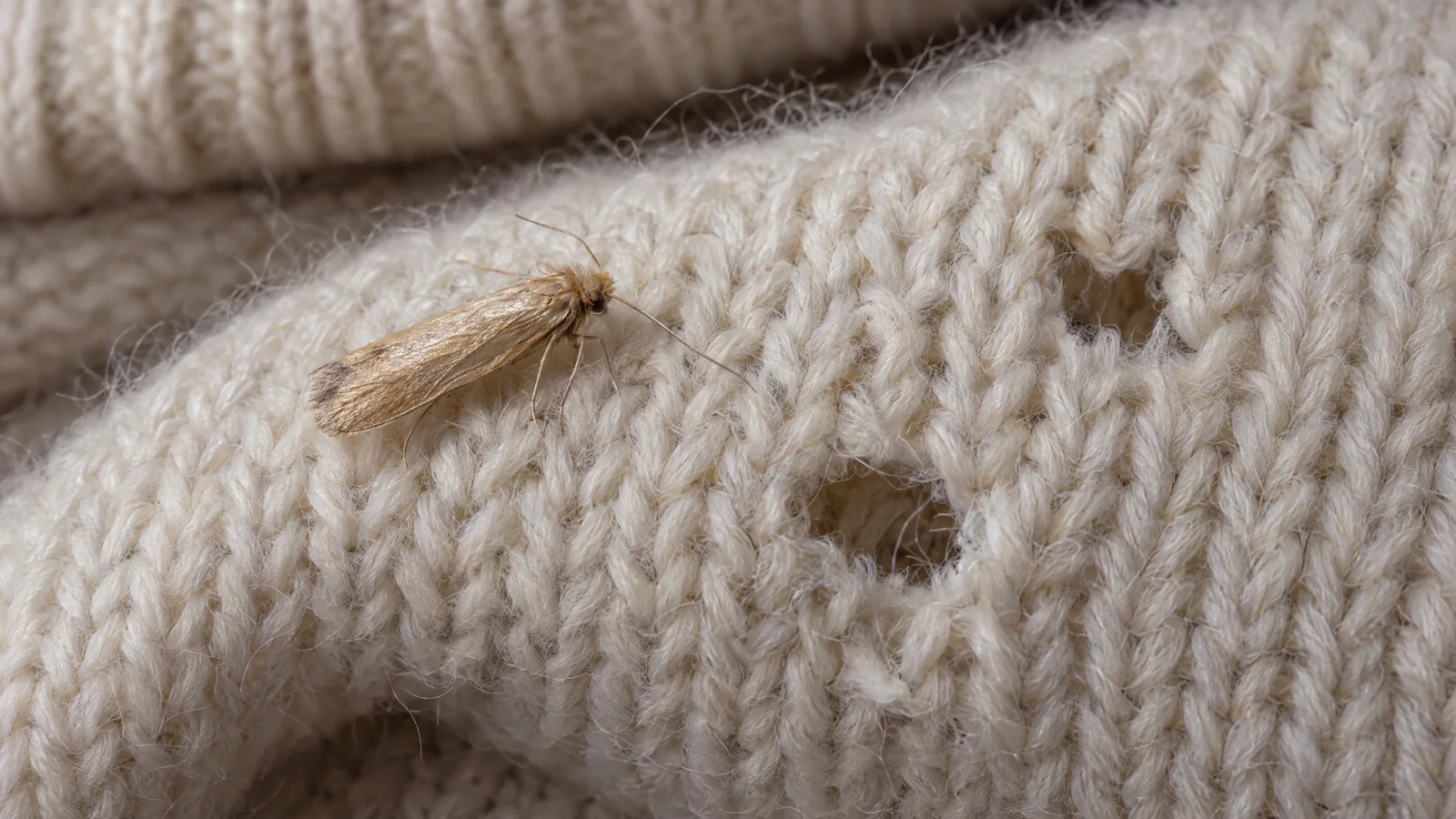
Holes in cashmere, thinning rugs, tiny pale moths in the wardrobe? How to recognise clothes moth damage, which moth you have, and why professional treatment works.
Few household pests cause as much quiet heartbreak as clothes moths. A cashmere jumper with a scatter of holes, a treasured wool coat ruined, a bare patch in an expensive rug. Clothes moth damage usually goes unnoticed for months, because the culprits are tiny, they avoid light and they work in the darkest, least disturbed corners of the home.
This guide explains how to recognise clothes moth damage, which moths cause it, why it tends to spread and why professional treatment is the most reliable way to stop it, whether you live in a Manchester flat or a large Cheshire family home.
What clothes moth damage looks like
The damage is done by the larvae, not the adult moths, and it has some distinctive features.
- Irregular holes in knitwear, suits, coats, scarves and blankets made from wool, cashmere, silk, mohair and other natural fibres.
- Hidden locations. Damage often starts under collars, in cuffs, along seams and in folds, where larvae are undisturbed.
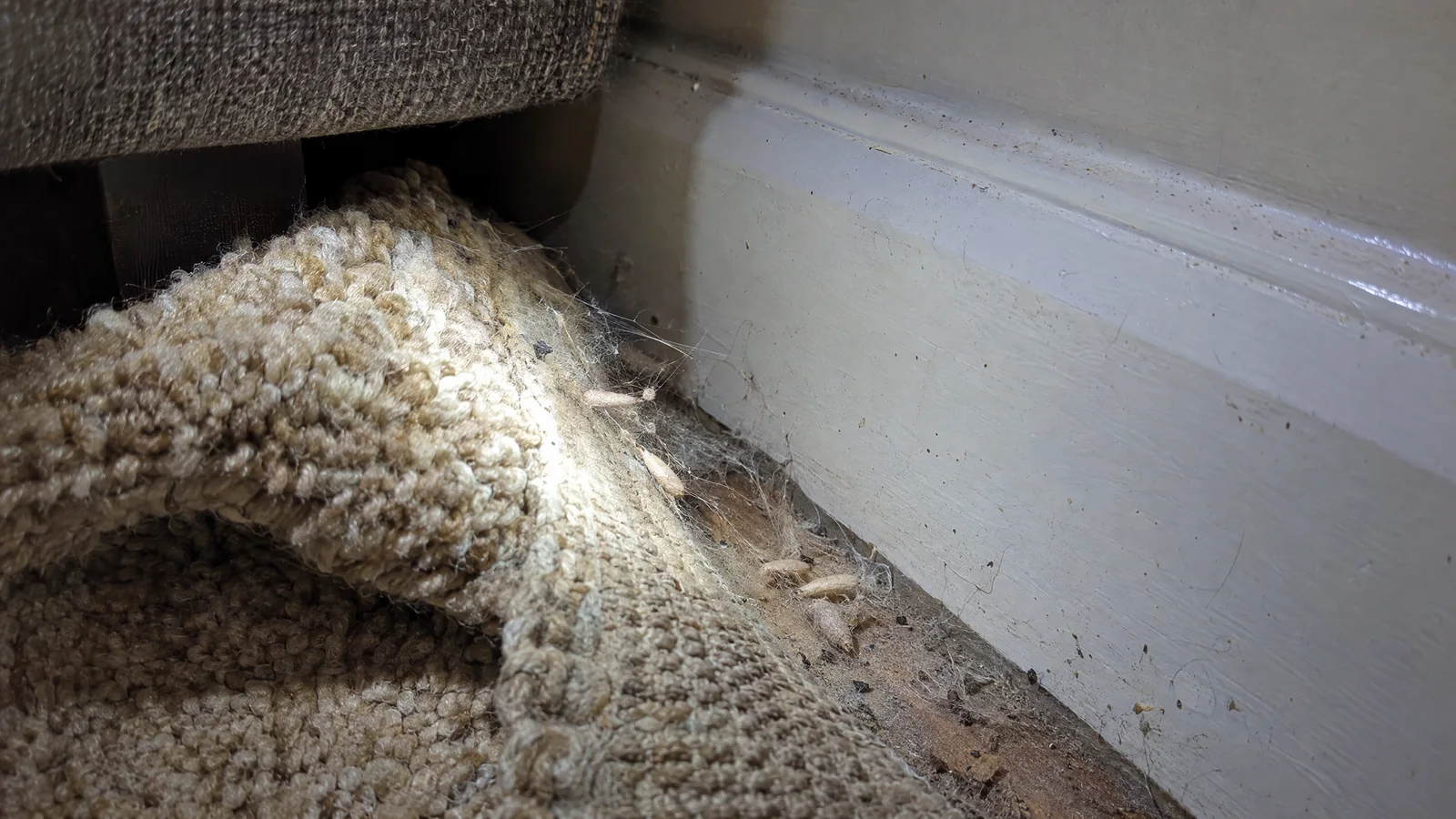
- Thinning or bare patches in wool carpets and rugs, especially under beds, sofas and other heavy furniture, and along skirting boards.
- Fine silk webbing or tubes on the fabric surface.
- Small cases stuck to fabric or carpets, a sign of the case-bearing species.
- Small pale moths fluttering in wardrobes, or running rather than flying when disturbed.
Which clothes moth do you have?
Two species account for most damage in UK homes.
Common clothes moth
The adult is small, pale golden buff and avoids light. Its larvae spin silk webbing and tubes as they feed, often leaving a matted area on the fabric. Our page on the common clothes moth explains its life cycle.
Case-bearing clothes moth
Slightly darker, with faint spots on the wings. Its larvae carry a small portable case made of silk and fibres, which can take on the colour of the fabric they are feeding on. See our profile of the case-bearing clothes moth.
Carpet beetle larvae cause similar damage and are often mistaken for moths. Protec also offers carpet beetle treatments.
Why clothes moth damage spreads
Clothes moths thrive in warm, dark, undisturbed places with a supply of natural fibres. Modern homes, with central heating and more wool and cashmere than ever, suit them well.
Hidden larvae. Larvae live under furniture, in carpet edges, under floorboards and in stored items, not only in the wardrobe where you found the holes.
Continuous breeding. In warm homes, moths can breed through much of the year, rather than only in summer.
Easy transport. Eggs and larvae travel in second hand clothes, vintage rugs and furniture.
Unnoticed damage. By the time holes appear, larvae may have been active for a long time, and in several rooms.
If you are finding damage, call Protec on 0161 448 1782 and we can talk you through the next step.
Why DIY rarely stops clothes moths
Most people throw away the damaged item, wash a few clothes and hang up something from the shop. The damage usually continues.

- The source is elsewhere. The larvae causing damage are often in carpets, under floorboards or in other rooms.
- Eggs are missed. They are tiny and well hidden, and many treatments do not affect them.
- Monitoring is not treatment. Some products only show you that moths are present; they do not deal with larvae.
- Wrong identification. Treating for moths when the problem is carpet beetles, or vice versa, leads to disappointing results.
- Partial coverage. Dealing with one wardrobe leaves the rest of the home to reinfest it.
A professional inspection identifies the species, finds every affected area and plans treatment around the full life cycle.
How Protec treats clothes moths
Our clothes moth treatment begins with an inspection to confirm the species and map where larvae are active, including carpets, wardrobes, drawers, lofts and under furniture. The technician then explains a treatment plan and any preparation needed beforehand, such as clearing wardrobes and floors in the affected rooms. Treatment is carried out across all affected areas, with follow-up visits where needed to confirm the problem has gone.
You can read more about our wider moth control service, which covers homes across Greater Manchester and Cheshire.
Moths through the year
Clothes moths used to be seen as a summer pest, but warm homes now allow activity in every season. Damage is often discovered in autumn, when winter clothes come out of storage, and in spring, when adults become more visible. Our month by month pest calendar shows how activity changes over the year.
Older Cheshire homes with wool carpets, period furniture and lots of storage space are frequent callers, as are city apartments where wardrobes are packed and rarely emptied.
We also see clothes moth damage in holiday lets and rented homes with furnished rooms, where rugs and soft furnishings may sit undisturbed between guests or tenancies. For landlords, damaged carpets and furniture can mean a costly replacement, so it pays to have any signs looked at early. Homes that have recently taken in second hand furniture, vintage clothing or inherited items are another common starting point, because eggs and larvae can arrive hidden in the fibres. If you have recently brought anything like this into the house, mention it when you call, as it can help the technician trace where the problem started.
Frequently asked questions
What does clothes moth damage look like?
Look for small, irregular holes in wool, cashmere, silk and other natural fibres, often in hidden areas such as under collars, cuffs and folds. Carpets and rugs show thinning pile or bare patches, especially under furniture and along edges. Fine silk webbing or small cases near the damage point to moth larvae.
Which clothes moths are found in UK homes?
The two main species are the common clothes moth, a small pale golden moth whose larvae spin silk webbing, and the case-bearing clothes moth, whose larvae carry small portable cases. Both feed on natural fibres. Knowing which species is present helps a technician plan treatment and locate the source.
Why does clothes moth damage keep appearing?
The larvae that cause damage live in dark, undisturbed places, including under furniture, in carpet edges, under floorboards and in stored items, not just the wardrobe where you notice holes. Eggs are tiny and easy to miss. Unless all affected areas are treated together, the next generation continues the damage.
Could the damage be carpet beetles instead?
Yes. Carpet beetle larvae, sometimes called woolly bears, also damage natural fibres and are often mistaken for moths. They leave small hairy shed skins rather than silk webbing. Protec treats both, and a technician can confirm which you have, which affects how treatment is carried out.
Does Protec treat clothes moths across Cheshire?
Yes. Protec treats clothes moths and carpet beetles in homes across Manchester, Stockport and Cheshire, including Wilmslow, Alderley Edge, Knutsford and Macclesfield. Call 0161 448 1782 to describe the damage you have found and we will arrange an inspection and a clear quote.
Protect your clothes and carpets
If you are finding clothes moth damage, call Protec on 0161 448 1782 or contact Protec to request a quote. For more advice, visit the Protec blog.
Questions answered
Frequently asked questions
What does clothes moth damage look like?
Look for small, irregular holes in wool, cashmere, silk and other natural fibres, often in hidden areas such as under collars, cuffs and folds. Carpets and rugs show thinning pile or bare patches, especially under furniture and along edges. Fine silk webbing or small cases near the damage point to moth larvae.
Which clothes moths are found in UK homes?
The two main species are the common clothes moth, a small pale golden moth whose larvae spin silk webbing, and the case-bearing clothes moth, whose larvae carry small portable cases. Both feed on natural fibres. Knowing which species is present helps a technician plan treatment and locate the source.
Why does clothes moth damage keep appearing?
The larvae that cause damage live in dark, undisturbed places, including under furniture, in carpet edges, under floorboards and in stored items, not just the wardrobe where you notice holes. Eggs are tiny and easy to miss. Unless all affected areas are treated together, the next generation continues the damage.
Could the damage be carpet beetles instead?
Yes. Carpet beetle larvae, sometimes called woolly bears, also damage natural fibres and are often mistaken for moths. They leave small hairy shed skins rather than silk webbing. Protec treats both, and a technician can confirm which you have, which affects how treatment is carried out.
Does Protec treat clothes moths across Cheshire?
Yes. Protec treats clothes moths and carpet beetles in homes across Manchester, Stockport and Cheshire, including Wilmslow, Alderley Edge, Knutsford and Macclesfield. Call 0161 448 1782 to describe the damage you have found and we will arrange an inspection and a clear quote.
Need pest control advice?
Talk to Protec about your pest problem.
Call for clear advice and the right next step for your property.