
Fluffy and round, smooth and shiny, or big and chestnut brown? How to tell a bee, wasp or hornet apart, why it matters, and why any nest is best left to a professional.
Every summer we take calls that start with the same uncertainty: "I think it is a wasp nest, but it might be bees." Knowing whether you are looking at a bee, wasp or hornet matters, because each behaves differently, carries different risks and needs a different response. Bees are valued pollinators that are often best left alone or handled with expert advice. Wasps and hornets near homes can be a genuine safety concern.
This guide explains how to tell them apart, what their nests look like, why the difference matters and why any nest near your home is best assessed by a professional.
How to tell a bee, wasp or hornet apart
Look at the body shape, the hair, the colour and, just as importantly, the behaviour.
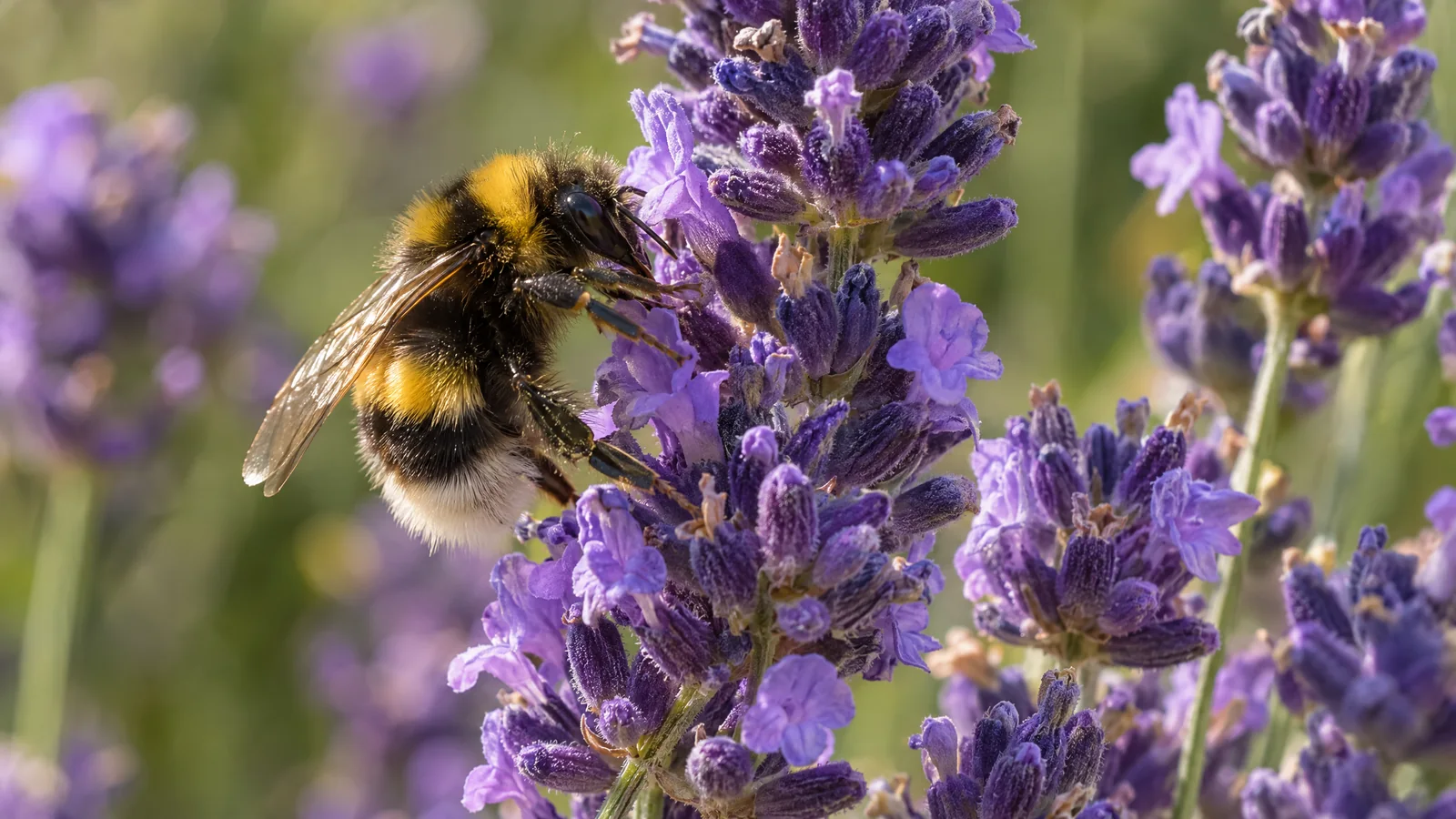
Bumble bees
Large, round and fluffy, with bands of black, yellow, white or orange. They move slowly between flowers and are generally gentle. Nests are small and often in bird boxes, compost heaps, under sheds or in the ground. See our page on bumble bees.
Honey bees
Smaller and slimmer than bumble bees, golden brown to dark brown, with fine hair. They live in large colonies and may arrive as a swarm, a cluster of thousands of bees hanging from a branch or wall. Read more about honey bees.
Masonry bees
Small, solitary bees that make holes in soft mortar or old brickwork in spring. They do not form colonies and are generally harmless. Our masonry bees page explains more.
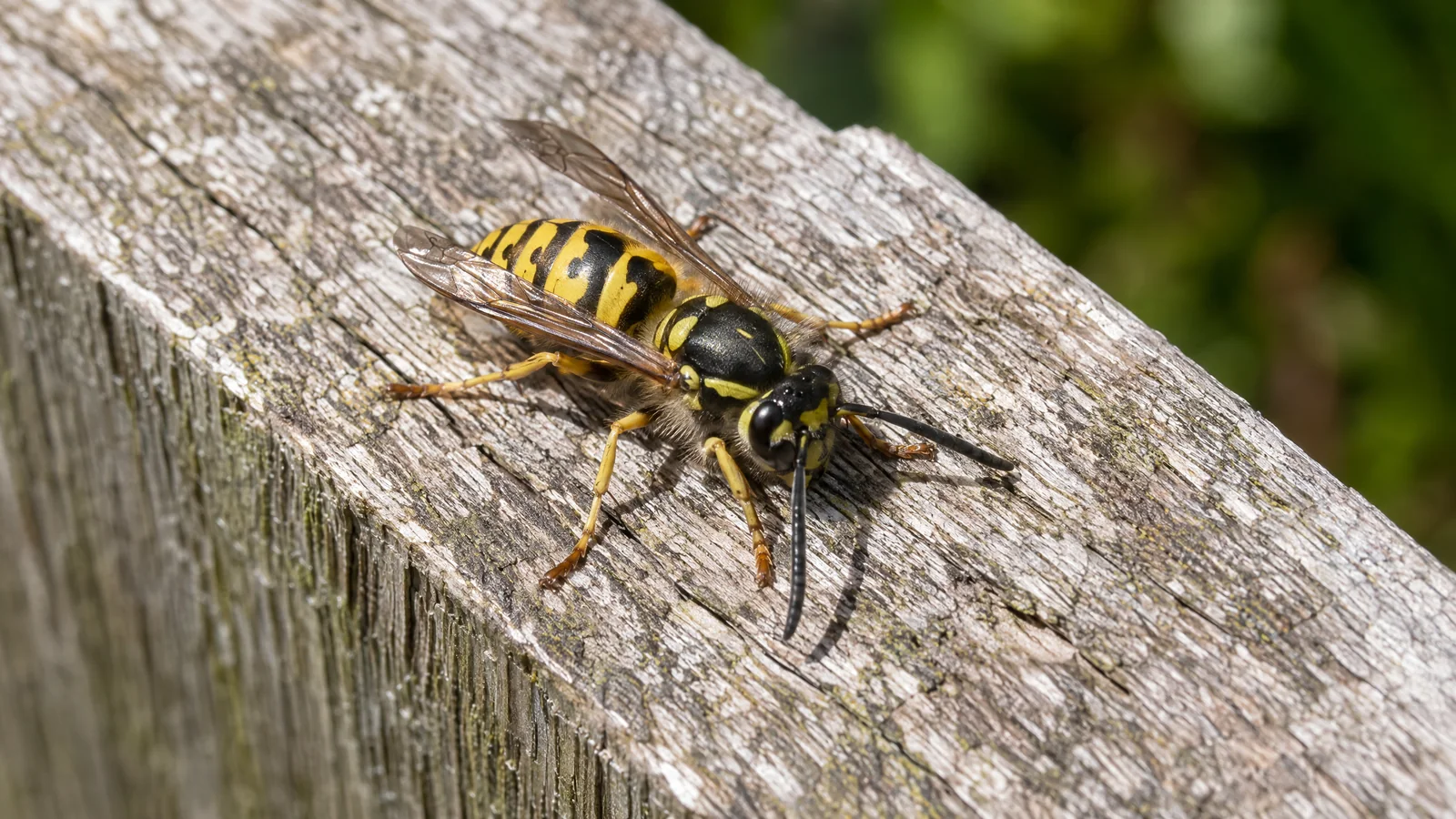
Common wasps
Smooth, shiny and bright yellow and black, with a narrow waist and a more angular look. They fly quickly, are attracted to sugar, meat and bins, and become more aggressive in late summer.
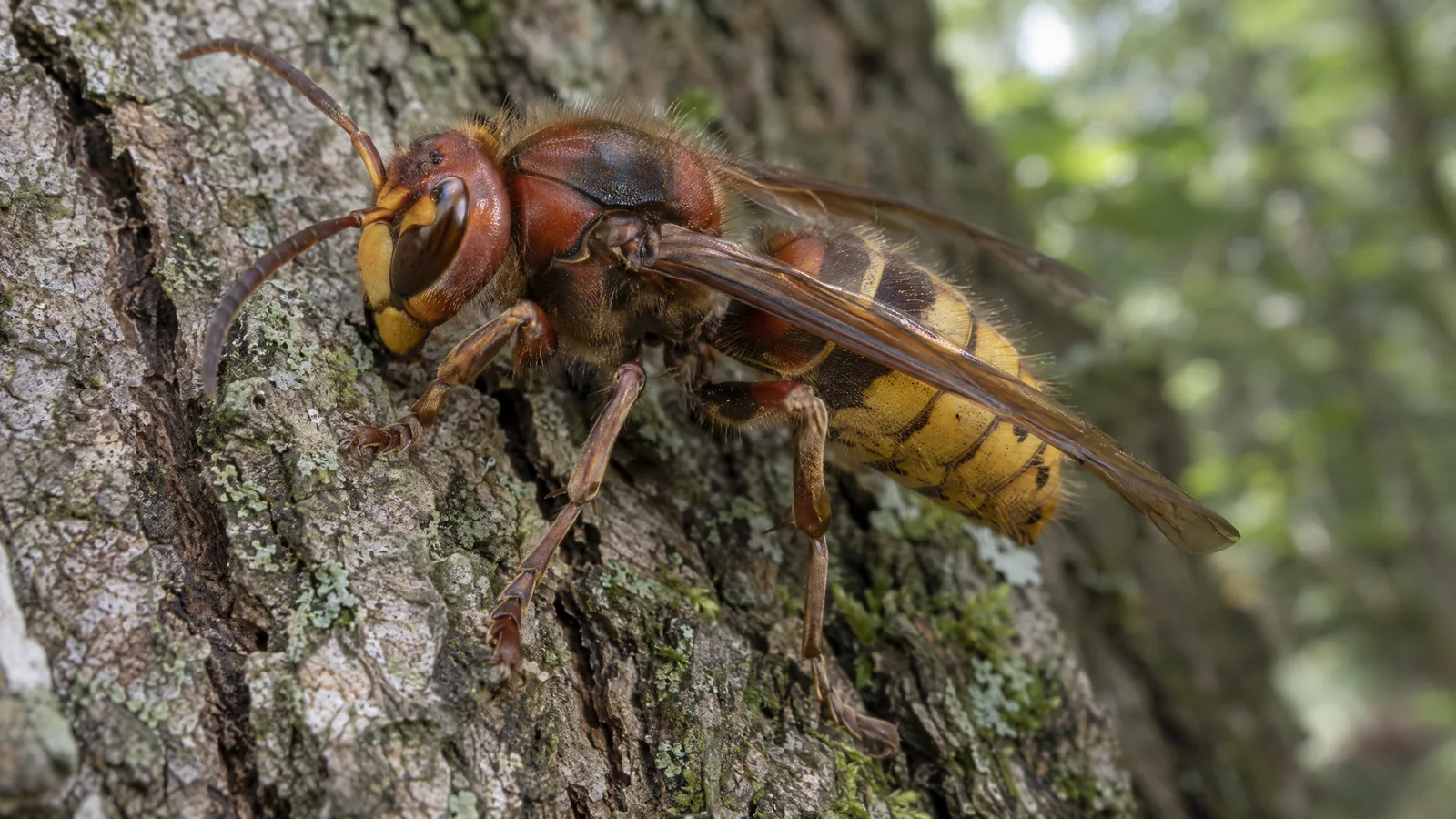
European hornets
Much larger than a wasp, with chestnut brown and yellow markings. They are often seen near trees and can fly at dusk. Our wasps and hornets page has more detail.
What their nests look like
Bumble bee nests are small, untidy and often hidden in holes, bird boxes or under sheds, with a few bees coming and going.
Honey bee colonies can be in cavities, chimneys or wall voids, with a steady stream of bees. Swarms are temporary clusters looking for a new home.
Wasp nests are made from a grey, papery material with a swirled pattern. They are found in lofts, eaves, sheds, wall cavities and the ground, and can be very large by late summer.
Hornet nests are similar to wasp nests but often brown and paper-like, in hollow trees, sheds, barns and roof spaces.
Why the difference matters
Bees are valuable pollinators. Many bee situations can simply be left alone, as bumble bee colonies are short lived. Honey bee swarms may be collected by a local beekeeper. That is why getting the identification right matters before anything is done.
Wasps defend their nests. A wasp nest near a door, window or play area can lead to multiple stings if disturbed. For anyone with a known allergy, this can be serious. If you are concerned about a sting reaction, contact NHS 111, or call 999 in an emergency.
Hornets need respect. Hornets are less likely to bother people away from their nest, but a disturbed nest can be dangerous, and nests are often at height.
Non-native hornets. If you ever suspect you have seen an Asian hornet, which is darker with yellow legs, it should be reported to the authorities rather than approached.
Why you should not tackle a nest yourself
Whatever the insect, we advise against approaching or disturbing a nest.
- Misidentification is easy. Treating bees as wasps harms pollinators and is unnecessary.
- Nests provoke a defensive response. Wasps and hornets can sting repeatedly.
- Nests are hard to reach. Many are at height, in lofts or in wall cavities.
- Shop-bought products are limited. They often fail to reach the nest itself.
- Safety equipment matters. Technicians wear full protective clothing for good reason.
When each one is most active
Bumble bee queens appear early, often on mild days in March, and their colonies are finished by late summer. Masonry bees are a spring sight, busy around old brickwork from April to June. Honey bee swarms are most likely from May to July, when colonies split. Wasp queens emerge in April, and nests grow steadily until late August and September, when wasps become most noticeable around food and bins. Hornets follow a similar pattern but are often seen later in the day and into the evening.
That timing can help with identification. A large, slow, fluffy insect in March is almost certainly a bumble bee queen. A stream of small, shiny insects disappearing under the eaves in August is very likely a wasp nest. If you are unsure, a photo taken from a safe distance is a big help when you call.
How Protec can help
Call Protec on 0161 448 1782 and describe what you are seeing. The team will help identify the insect and advise on the right next step. For bees, that may simply be reassurance or a referral to a local beekeeper, and our bee-related services page explains what we can do. For wasps and hornets, a technician will assess the nest and treat it safely, usually in a single visit.
We cover the whole area, including bee advice in Macclesfield and wasp control in Wilmslow. Our wasp nest treatment guide explains what happens when we treat a nest.
Frequently asked questions
How can I tell a bee from a wasp?
Bees are usually rounder and hairier, with softer colouring, and are focused on flowers. Wasps are smooth, shiny and bright yellow and black, with a narrow waist, and are drawn to sugary drinks, food and bins in late summer. Watching how the insect behaves is often as helpful as its appearance.
What does a European hornet look like?
The European hornet is much larger than a common wasp, with chestnut brown and yellow colouring rather than black and yellow. Hornets often nest in hollow trees, sheds and roof spaces and can be active at dusk. They are generally less aggressive than wasps away from the nest, but a nest should not be disturbed.
Should bees be treated like wasps?
No. Bees are important pollinators and are treated very differently. Many bee issues, such as a bumble bee nest in a bird box, can be left alone because the colony is short lived. Honey bee swarms may be collected by a local beekeeper. Professional advice helps you decide the right course.
Can I treat a wasp or hornet nest myself?
We strongly advise against it. Disturbing a nest can provoke many insects at once, and nests are often at height or in tight spaces. Anyone with a known sting allergy should keep well away. A trained technician has protective equipment and the experience to deal with nests safely.
Does Protec give advice on bees as well as wasps?
Yes. Protec provides advice on bees and treats wasp and hornet nests across Manchester, Stockport and Cheshire, including Macclesfield and Wilmslow. Call 0161 448 1782 to describe the insects and where they are, and the team will advise on the right next step.
Not sure what you have? Call Protec
If you are unsure whether you have a bee, wasp or hornet nest, call Protec on 0161 448 1782 for advice and a quote. For more guides, visit the Protec blog.
Questions answered
Frequently asked questions
How can I tell a bee from a wasp?
Bees are usually rounder and hairier, with softer colouring, and are focused on flowers. Wasps are smooth, shiny and bright yellow and black, with a narrow waist, and are drawn to sugary drinks, food and bins in late summer. Watching how the insect behaves is often as helpful as its appearance.
What does a European hornet look like?
The European hornet is much larger than a common wasp, with chestnut brown and yellow colouring rather than black and yellow. Hornets often nest in hollow trees, sheds and roof spaces and can be active at dusk. They are generally less aggressive than wasps away from the nest, but a nest should not be disturbed.
Should bees be treated like wasps?
No. Bees are important pollinators and are treated very differently. Many bee issues, such as a bumble bee nest in a bird box, can be left alone because the colony is short lived. Honey bee swarms may be collected by a local beekeeper. Professional advice helps you decide the right course.
Can I treat a wasp or hornet nest myself?
We strongly advise against it. Disturbing a nest can provoke many insects at once, and nests are often at height or in tight spaces. Anyone with a known sting allergy should keep well away. A trained technician has protective equipment and the experience to deal with nests safely.
Does Protec give advice on bees as well as wasps?
Yes. Protec provides advice on bees and treats wasp and hornet nests across Manchester, Stockport and Cheshire, including Macclesfield and Wilmslow. Call 0161 448 1782 to describe the insects and where they are, and the team will advise on the right next step.
Need pest control advice?
Talk to Protec about your pest problem.
Call for clear advice and the right next step for your property.